Technical Significance
Superstructure
John Oxley was never modified and retains her original layout and configuration. Many similar ships have been extensively altered and re-engined.
John Oxley is especially valuable as she is a very conventional and typical ship of her time (straight stem, counter stem, raised forecastle, well deck, raised boat deck, machinery amidships, tall funnel, and with accommodation aft). She has six watertight compartments and a tunnel space.
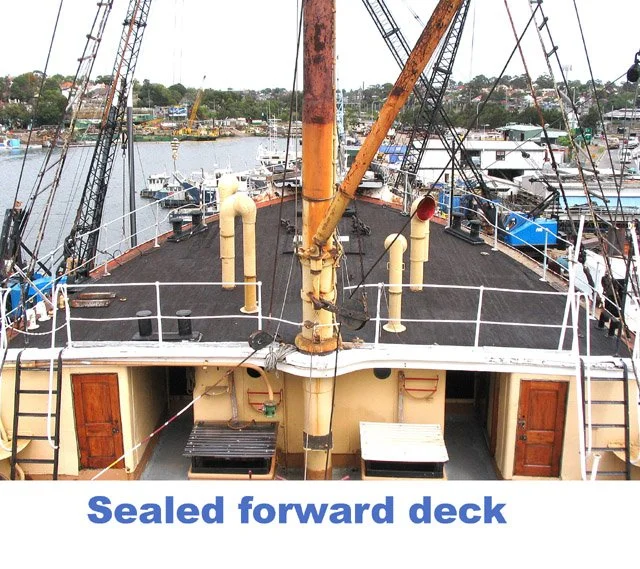
Well deck, cargo winch and derrick are significant being a typical rig for cargo handling during the earlier part of this century. The same can be said regarding her boats and their handling. Teak decks were also laid on most ships from this period.
John Oxley is riveted in steel using the conventional in-out plating system. The ends of each plate are lapped and have no butt straps. Her frames are the more modern and lighter joggled system (no packers at out strakes). She is a single bottomed vessel with no tank tops.
Fit out for crew and for officers/pilots are of typical quality for the period. The cabins, washrooms, mess and pantries for officers and pilots in particular have varnished Queensland Maple paneling and furniture. This timber was shipped to Scotland by the Queensland Government, especially for John Oxley.
Propulsion
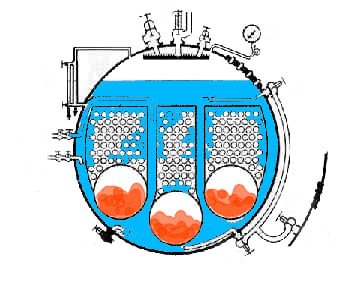
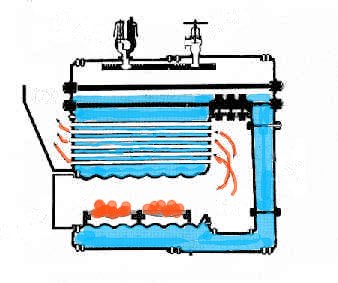
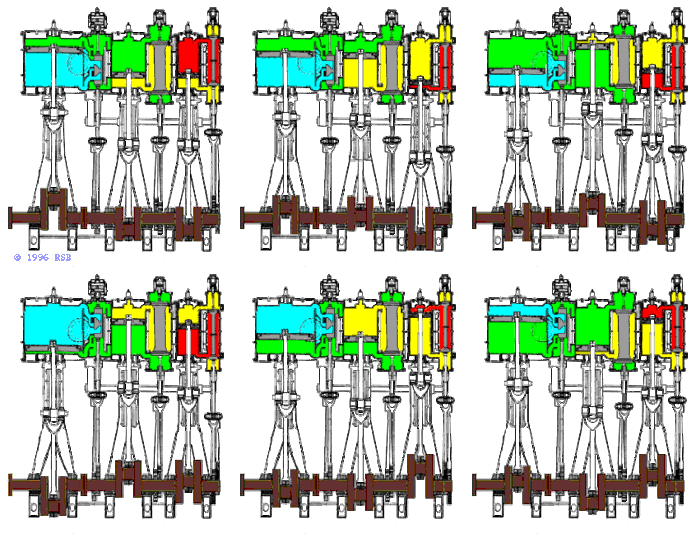
The layout of two boilers athwartships with a triple expansion steam engine is very typical of marine engineering from this period. This machinery layout was used for most of the many thousands of small steamships that no longer exist.
Originally coal fired, John Oxley retains her coal burning furnace fronts with a commercial conversion for oil fuel built and installed by a local company, Sergeants of Brisbane, in 1946. As such she represents two technologies. As an oil burner she is significant in that she combined Howden's forced draft with a locally manufactured oil fuel conversion.
Note that John Oxley burnt heavy fuel oil, which was once a common marine fuel, but today is no longer available.
John Oxley has a comprehensive set of steam-powered auxiliaries. These include the usual condenser (fabricated), independent air, feed, circulating and bilge pumps, feed heater/filter, FD fan, air beater, a 110 v. dynamo, L. Sterne ammonia refrigeration set, steam steering engine and a sanitary pump. Her layout is very typical of marine engineering of the period.
John Oxley has a propulsion system that would adequately power a considerably larger vessel.
Restoration of the John Oxley commenced in 1982 and continues today by Fleet volunteers. In this respect the Fleet is fortunate in having, in its Records Centre, many of the original 1927 drawings produced by Bow, MacLachlan & Co. Ltd. in 1927.